
- By Danish
- May 19, 2026
- Water Dispensers
How to Choose the Right Water Dispenser for Home or Office
Around lunchtime in many Ghanaian offices, there is almost always someone wrestling with an empty bottle while everyone else hovers, waiting for cold water. This makes finding the right water dispenser for office use less of a luxury and more of a productivity requirement. At home, the scene looks a bit different, but the vibe is the same.
It’s why we’re seeing more people treat shopping for the best water dispenser for home as a daily necessity rather than just another appliance taking up space.
Buying one is the easy part. Choosing the right one? Not so much. Most people only notice the functional gaps after they’ve already set it up. We tend to pick based on price or how it looks on a website, only to realize later that it doesn’t actually match how we live or work. That’s where the regret kicks in.
The fix is simple: use this recommended water dispenser buying guide to navigate the essentials. We’re giving you the basics, hot and cold options, space constraints, and whether a floor-standing unit or a desktop model actually fits your lifestyle.
Home vs Office Water Dispenser: What You’re Really Choosing
The first step in understanding different types of water dispenser setups is determining where it will be used.
A home setup solves a different problem from an office setup. At home, people want easy access to clean water throughout the day. In offices, it’s about speed, volume, and constant use.
Water dispenser for home: what actually works
For a water dispenser for home use, the focus is really just on daily comfort. Most households are looking for a reliable way to get clean drinking water and steady access, alongside those necessary safety features like child locks on the hot taps.
In larger Ghanaian homes, floor-standing models ideally work better because they hold more water and handle frequent use. A common example in this category is a dispenser with a drudge and tap, which is built for everyday household use where hot and cold water are needed throughout the day.
Water Dispenser For Office Use: built for demand
Installing a dispenser in an office changes the expectations of how you consume water completely. Unlike for home use, a water dispenser for the officeneeds to handle constant use, steady cooling and heating, and multiple people using it throughout the day.
Floor-standing units are the better move here. A floor-standing water dispenser with 3 taps is built for high-demand environments, offering faster cooling and heating alongside anti-overflow protection for busy settings. It also includes a fridge compartment, which matters more in shared spaces than most people expect.
Top-Load vs Bottom-Load Dispensers (the real decision point)
When you start browsing water dispenser types on e-commerce sites, you usually end up choosing between a top-load or bottom-load dispenser. Top-load models are the standard because they’re simpler and more affordable, you just lift the bottle and flip it onto the top.
Bottom-load models skip that heavy lifting entirely. The bottle slides into a base compartment instead. They’re easier on your back but come with a higher price tag and a slightly more complex setup. Ultimately, both do the same job. The real difference is just the level of effort involved.
Quick Guide: Top-Load vs Bottom-Load Water Dispenser
Feature Top-Load Bottom-Load What it is Bottle sits on top Bottle sits in a lower cabinet Daily effort You lift heavy water bottles No lifting, bottle slides in Cost Lower upfront cost Higher upfront cost Ease of use Simple, familiar setup Easier for frequent use Maintenance Fewer parts, easier to manage Pump system needs occasional checks Best for Homes, budget-conscious buyers Offices, convenience-focused users Common reality in Ghana Widely used, reliable in basic setups Growing in offices and shared spaces
What About Hot Vs Cold Water Dispensers?
Deciding on a hot and cold water dispenser is ultimately an exercise in auditing your daily habits.
For most, cold water is the non-negotiable default- the immediate fix for a heatwave or a mid-afternoon slump in a crowded office. Hot water, by contrast, is more situational. It’s a luxury of efficiency, perfect for that rapid-fire cup of tea, a French press, or an instant meal. It saves you the three-minute wait for a kettle, but it’s only an asset if you’re actually going to use it.
The logic is fairly straightforward: if your goal is purely hydration, a standard cold model is the smarter, more focused investment. But if you’re looking to bake a little more convenience into your workflow, the hot and coldcombo is the one that actually makes sense.
Space matters more than people expect
We tend to obsess over price, aesthetics, and features, but we almost always forget to measure the floor. It’s a classic oversight. People end up with a floor-standing water dispenser that blocks a doorway or a unit that’s simply too small to keep up with the crowd.
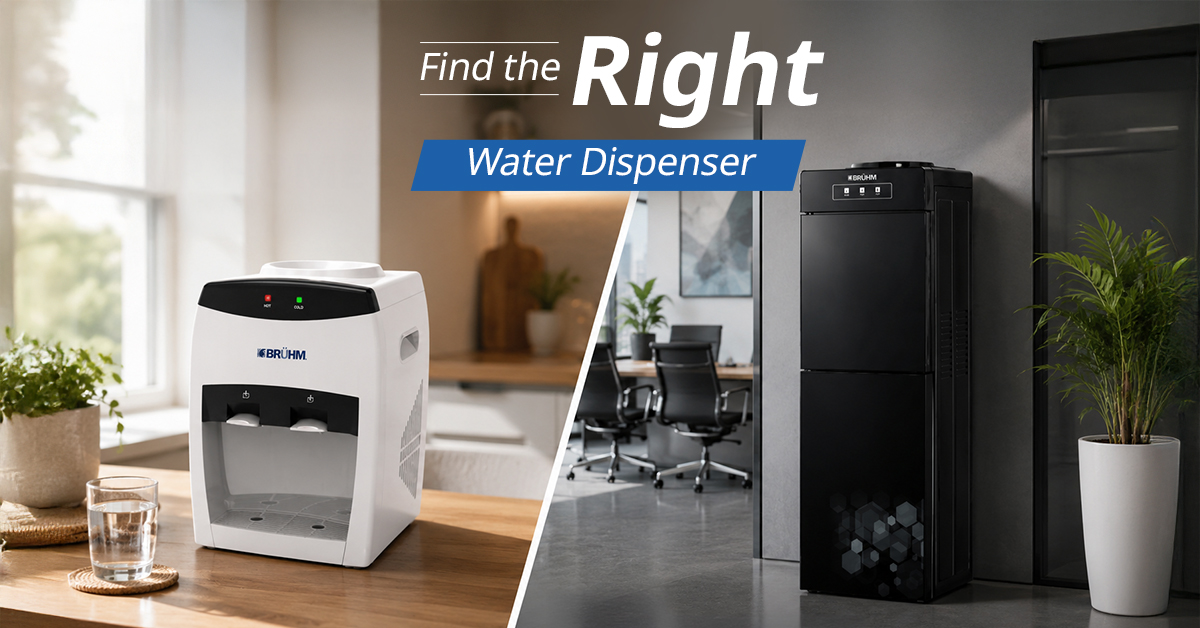
The choice usually comes down to your square footage. Countertop water dispensers are the move for tight quarters. They sit on a desk or a kitchen island, designed for light, personal use when you can’t afford to lose any more floor space.
Floor-standing models, on the other hand, belong in shared kitchens or busy offices. They’re built for high-traffic areas where the space matters less than the capacity.
The math is simple: if you have a lot of people and plenty of room, go floor-standing. If you’re short on space and only hydrating a few, stick to the tabletop.
Features that actually matter
It is easy to overthink the technical specs, but most of these features are actually quite binary. You either need them or you don’t.
When looking at temperature options, you have to decide between a standard hot and cold water dispenser or a more versatile 3-tap system. The latter is great for offices, but a hot and cold system is only a smart investment if you genuinely plan to use both.
You also need to consider cooling systems. Compressor cooling is the industrial-strength choice; it’s faster and more reliable for high-traffic areas. Electronic systems are quieter and lighter, but they might struggle to keep up during power fluctuations.
Then there are the lifestyle additions. In a family setting, child locks are a non-negotiable safety feature for the hot tap. Meanwhile, in a shared workspace, choosing a model with a fridge compartment adds a layer of utility that most people don’t know they need until they have it.
At the end of the day, your water dispenser’s capacity needs to match your head count. Don’t buy a high-volume machine for a quiet house, and don’t expect a small tabletop unit to survive a busy office.
Maintenance (the part people ignore)
Maintenance usually fails because it’s invisible. Most issues start quietly and only become obvious once the machine stops working.
Keeping things running smoothly is mostly about a few small, consistent habits. First, make sure to clean the reservoir regularly. It’s the easiest way to keep the water tasting fresh and prevent any buildup inside.
If your model has a hot water function, you should descale the hot tank every few months. This just means clearing out the minerals that naturally collect in the tank over time. Also, a quick way to save energy and protect the parts is to switch off the heating button when you don’t need it, like at night or over the weekend.
Ultimately, these small steps are what make the difference between a machine that lasts for years and one that breaks down early.
The best water dispenser isn’t necessarily the one with the most sophisticated internal pump or the sleekest chassis. It is simply the one that integrates seamlessly into the reality of your day-to-day.
Whether you’re solving for a high-traffic office lunchtime or a quiet kitchen corner, the goal is the same: frictionless access to what you need. Most buying mistakes happen when we choose the life we think we should have rather than the one we actually live. If you focus on the practical math of your headcount and your square footage, you’ll find that the right choice is usually the most obvious one. It’s an investment in the basic infrastructure of your environment and when done right, you’ll likely forget the machine is even there.
FAQs –
Not at all. These can be installed yourself. All you need to have is a standard wall outlet and a flat piece of floor or counter space. You don’t need to do any plumbing since the water comes straight from the bottle you put on the machine.
Not as much as you’d think. With a water dispense, you’d consume less electricity than running a full-sized fridge or constantly boiling a kettle. The machine only draws a good amount of power when it’s actively chilling the water or heating it up.
Available floor space should be the first consideration. For instance, a countertop model works well if a homeowner only has a tiny kitchen to work with. Although a large unit takes up more floor space, it naturally holds more water for a big family. Additionally, a buyer should check the spout height so they don’t have to bend over awkwardly to fill a glass.
This happens because even though there is only one bottle on top, the water flows into two different areas inside. One side stays cold for drinking, and the other side stays hot for tea or quick meals. This is why you can fill a cold glass of water and then immediately use the other tap for a hot drink without any waiting around.