
- By Danish
- August 31, 2026
- Microwave
Beyond Reheating: The Right Microwave for Busy African Kitchens
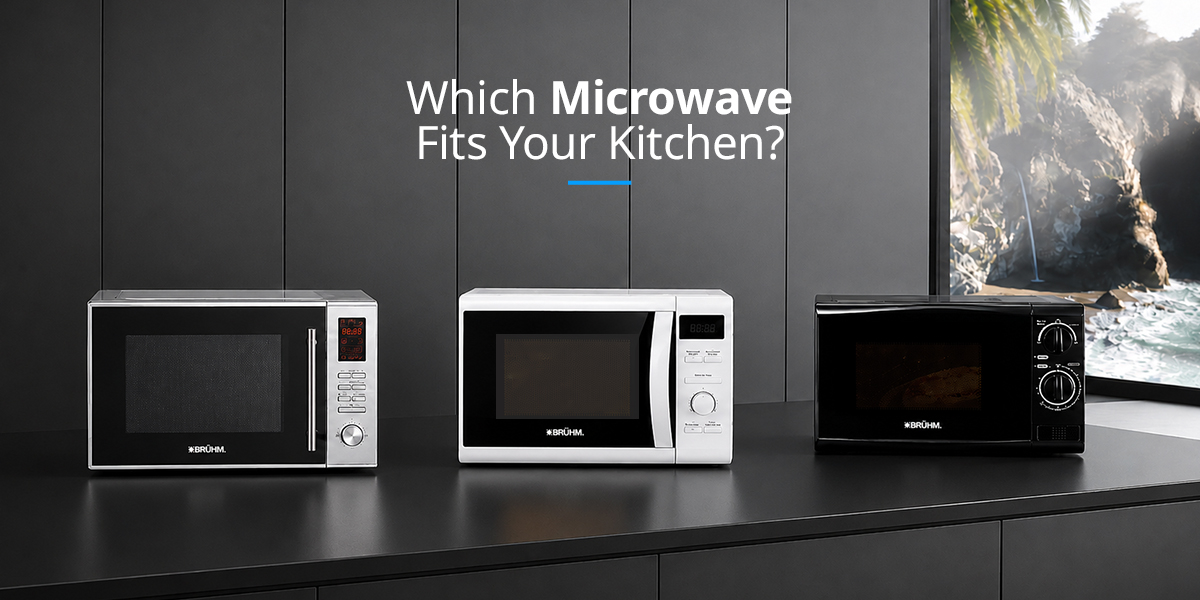
Guide to selecting a truly useful microwave oven for a busy African kitchen
Urban life is fast-moving and super busy. No matter where we reside – Nigeria, Ghana or Uganda – we know we must move at supersonic speed if we have to reach our office on time after navigating through peak-period traffic in Lagos or Accra. Handling kitchen chores early in the morning or after a tiring day at work means we want machines that will make our lives simpler. We have many at our disposal – blenders, food processors, air fryers, microwave ovens, electric kettles, sandwich makers and more! However, many of us have ended up with kitchen appliances that are not really making a big difference.
One of the appliances that may be collecting dust on our kitchen countertop is a microwave oven. But hasn’t the world accepted this appliance as an indispensable tool? Then, what is making it not as useful for us?
Chale, let us clear the confusion. Choosing the right appliance starts with understanding how the different types fit into our daily kitchen workflow.
Why is your microwave oven better for cooking than your gas cooker?
Let’s admit it. We all love our gas cookers. Turn the knob, place your vessel, cook with one eye on the heat, and that’s how simple cooking is for us. But when we are falling short on time, the gas cooker might take up a tad bit more time in your schedule than you would like. A modern convection microwave can change the way urban households cook meals:
It helps cook with precision and speed: Microwaves use the water content inside the food to cook the food item quickly. If you have a grill or a convection microwave, it will keep the crispness and the crunch intact.
It saves on energy: Compare your gas bills to your electricity bills. A Microwave oven uses less time to warm or thaw food than a large gas burner waiting for heavy pots to heat up.
It saves time: With a gas cooker, you must stand by and monitor the food as it cooks to prevent it from burning. Microwave ovens come with cooking presets or automated cooking features that let busy professionals set the program and walk away.
Choose right now so you don’t regret it later: Solo vs. Grill vs. Convection Microwave Ovens
Most of us have a very basic knowledge about microwaves. We think they are used to reheat and perhaps thaw frozen meat. And so, when it comes to making a purchase, we make our decision based on the price tag. Falling within our budget is typically a solo microwave, and we purchase it with the notion of using it to bake, roast and grill. However, a solo microwave is not built for that, and our dreams of becoming a chef hit a roadblock when the unit produces soggy dough or pale, un-browned poultry.
Knowing the difference between the three types of microwave ovens helps us make an informed decision.
Solo Microwave ovens use standard microwave energy to vibrate water molecules inside food to heat it up quickly. It works well for rapid reheating, quick defrosting, and quickly warming liquids.
Grill Microwave ovens use standard microwave heating as well as an electric heating coil at the top to reheat and retain the crispness of the food. This microwave will save us time when we want to toast sandwiches or want to grill meats for your Suya recipe.
Convection Microwave ovens use standard microwave energy, a top grill coil, and a rear heating element paired with a powerful fan that blows hot air all around the food. This model is ideal for those who want to use the full potential of the microwave oven – baking, roasting whole chicken, as well as multi-stage cooking. Simply put, it is an all-in-one replacement for a standalone electric oven and an air fryer.
| Solo | Grill | Convection | |
| What to use it for | Reheating food and beverages; Thawing | Reheating food and beverages, toasting, grilling and heating crisp snacks | Bake, roast, prepare a full meal. |
| What type of cookware to use | Glass, ceramic, microwave-safe plastics | Glass, ceramic; metal racks permitted only in pure grill mode | Glass, ceramic; metal baking pans and foil permitted only in pure convection mode |
| What level of cooking presets are available | Basic (defrost to heat) | Intermediate (Microwave to Grill sequence) | Advanced (Defrost Convection Grill sequence) |
| Can I bake in this microwave oven? | No | No | Yes |
| Can I retain the crispness of the food? | No | Yes | Yes |
3 Mistakes We Wouldn’t Want to Make When Using a Microwave Oven
Now that you know the difference between the three types of microwave ovens, it might be easier to make a decision. However, operating these appliances in urban African homes means keeping a few practical infrastructure and safety tips in mind.
Do not mix up Power Output and Power Consumption: A microwave oven may be labelled as 900W, but it actually uses around 1,400W to run. This knowledge should inform your generator choice.
Do not ignore voltage fluctuations: When voltage levels drop too low, the internal heating element may not start, and this means the machine will run without getting hot. Use a heavy-duty automatic voltage stabilizer (AVS) to protect the machine from voltage fluctuations.
Do not use metals in standard microwave mode: Placing any metal item on standard microwave power can cause electrical sparks. Use aluminium foil only in convection mode.
Which Microwave Oven Works for Your Home?
With all the necessary information about microwave ovens, it might be easier to select a microwave oven suitable for your cooking needs. Here is a quick reference guide to help you select one:
For students, single professionals, or small households focused purely on fast reheating and defrosting, you can opt for solo microwave ovens, like one from the Bruhm Solo series. These models draw lower electrical power and run smoothly on standard generators. These are also easy to use and withstand sudden power surges well.
Families may want greater cooking flexibility but not want a full-sized oven. For them, the grill microwave ovens, like the ones from Bruhm, are the ideal option. With digital touch controls, a mirror glass door, and preset auto-menus, the built-in grill element lets you easily get a nice crisp finish on snacks, pies, and grilled meats.
Urban families planning to cook complex recipes in the microwave oven can opt for the convection model, like the Bruhm Convection Microwave Oven. This enables baking, roasting, as well as multi-step cooking, all in a single machine.
Step-by-Step Guide to Selecting the Right Microwave Oven
To make sure your purchase saves you real time and matches your lifestyle, follow this simple checklist before buying:
- Match Your Cooking Goals: Decide what you actually cook. If you only warm up leftovers, get a solo model. If you want crispy surfaces, choose a grill model. If you love baking and roasting, go for a convection model.
- Check Your Power Setup: Look at whether you rely on steady city power, a generator, or a solar inverter. Make sure your power source can handle the appliance’s total electricity draw, and pick up an automatic voltage stabilizer if your area suffers from weak voltage.
- Pick the Right Size: Choose compact 20L to 25L models for 1 to 3 people with limited counter space. Choose a larger 30L model like the Bruhm BME-30GS for bigger families who need space for whole chickens and baking pans.
- Choose Your Controls: Pick tough mechanical dials if your local power supply is unpredictable, or choose modern digital touch screens with child safety locks if you love sleek kitchen aesthetics and automated presets.
Choosing the right microwave is about much more than picking a price tag or saving a few minutes on leftovers; it is about peace of mind. By moving past the functional category fallacy and recognising that solo, grill, and convection models serve entirely different culinary purposes, urban households across West, East, and Central Africa can avoid buyer’s remorse and eliminate redundant appliances.
When paired with a realistic understanding of local power infrastructure – accounting for generator loads and automatic voltage stabilizers – a versatile machine like a convection microwave transforms how you cook. It is time to look beyond simple reheating and let the right appliance do the heavy lifting in your kitchen.
Browse through our range of microwave ovens and pick one that suits your needs.
FAQs –
When you are shopping for a new microwave in Africa, aim for a model with a 900 to 1200 watts capacity. A microwave oven with a higher wattage cooks and reheats faster; this matters when you are preparing rice, stews, and sides for a large household. Before you could make a purchase, you need to make sure your power supply and wiring can handle the working of the microwave.
If you are in the market for a new microwave set and face the constant hassle of power fluctuations, we suggest going in for a model that is sturdy and has mechanical dials, a voltage stabiliser or surge protection, and simple controls. This is because models with fewer digital parts cause fewer failures when power fluctuates. It is also important to purchase models with a warranty and good after-sales service backing.
For small households, 20 to 25 litres may be enough. For large families or anyone reheating big plates, choose 30 litres or more. Do not forget to check the turntable size so the microwave fits your regular dishes.
A microwave in Africa can do more than reheat. With it, you can steam vegetables, cook pap, warm moin moin, defrost meat, and finish one-pot rice or stews. It practically works best as a fast helper alongside your stove, not a full replacement for traditional cooking.
When using your new or old microwave, keep vents clear and wipe spills immediately. It is also important to check the door seal, and use a stabiliser. Avoid running the unit empty or putting metal inside. Regular cleaning and servicing will help it handle daily use.